
Citi Double Cash Card
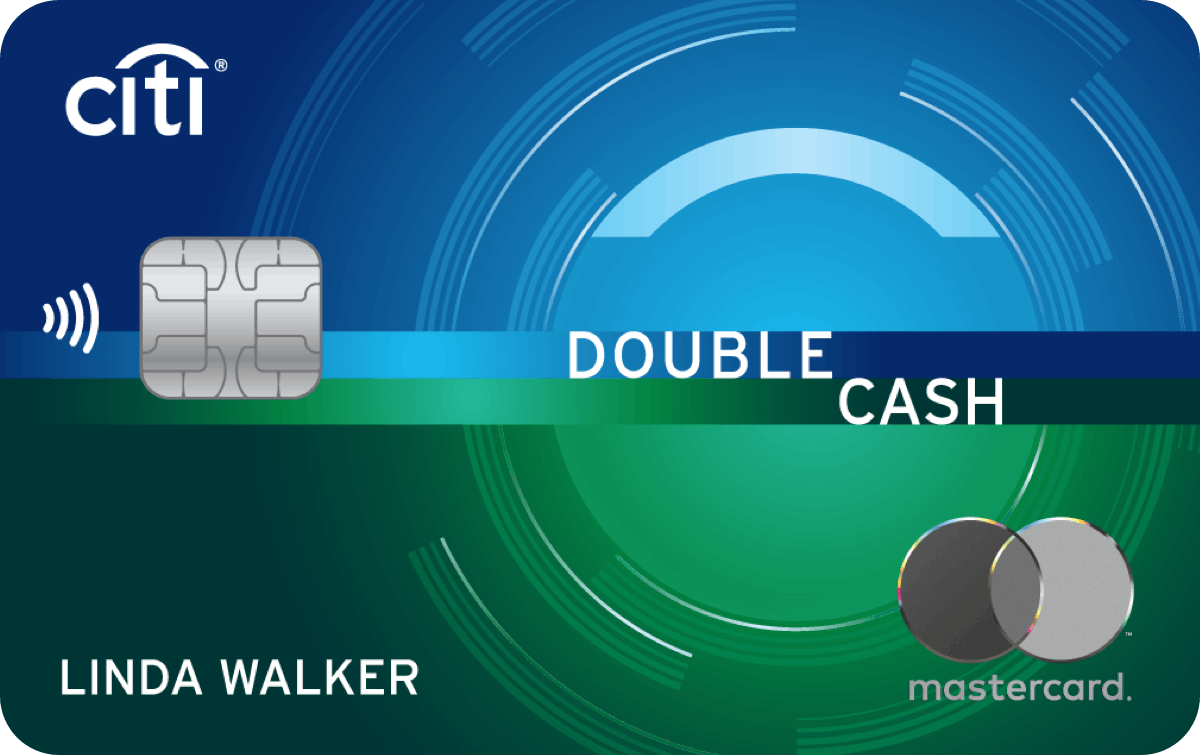
Earn $200 cash back after you spend $1,500 on purchases in the first 6 months of account opening.
Terms & restrictions apply. See rates & fees.
Citi Double Cash Review - The No-Nonsense Cash Back Card
No annual fee. No rotating categories. No complicated math. The Citi Double Cash gives you a flat 2% back on everything you buy, which makes it one of the simplest and most effective cash back cards on the market.
Not everyone wants to play the points and miles game. Some people just want cash back, no strings attached, and the Citi Double Cash has been one of the best options for that crowd since it launched. The concept is dead simple: you earn 1% when you make a purchase, and another 1% when you pay it off. That adds up to a flat 2% back on everything.
No annual fee. No category tracking. No quarterly activation. Just 2% back, all the time.
The Welcome Bonus
Citi offers a $200 cash back bonus after you spend $1,500 in the first 6 months. Compared to travel cards throwing around 60,000-75,000 point bonuses, this sounds modest. And honestly, it is. But the spending requirement is low ($1,500 over six months is $250/month), and you’re getting cash, not points that need to be redeemed strategically.
For a no-annual-fee card, $200 is a solid welcome offer. You’re not going to retire on it, but it’s a nice start. Offers like this move around, so check the current bonus and spending requirement on Citi’s official page before you apply.
How the Cash Back Works
The “Double Cash” name refers to the two-step earning:
- 1% cash back when you make a purchase
- 1% cash back when you pay your statement
Put those together and you get 2% on everything. The only requirement is that you actually pay your bill, which you should be doing anyway to avoid interest charges.
There are no bonus categories to think about. Gas, groceries, dining, online shopping, bills, subscriptions. It all earns 2%. For people who don’t want to carry five different cards optimized for different spending categories, this simplicity is the whole point.
How to Redeem
You can redeem your cash back in a few ways:
- Statement credits (no minimum)
- Direct deposit to a linked bank account
- Checks mailed to you
- ThankYou Points through Citi’s rewards portal
That last option is worth mentioning. The Double Cash actually earns Citi ThankYou Points, which you can transfer to airline partners if you also hold the Citi Premier or Citi Strata Premier card. This turns the Double Cash into a 2X-on-everything points card with transfer partner access. It’s a power move that a lot of people don’t realize is available.
The Balance Transfer Angle
Here’s something the Double Cash has quietly become known for: a long 0% intro APR on balance transfers. As of 2026, Citi runs an offer of 0% for 18 months on transferred balances. After that, the regular variable APR applies (17.49% - 27.49% as of 2026). The intro rate covers balance transfers only, not new purchases.
There’s a transfer fee to watch: 3% (minimum $5) on transfers made in the first 4 months, then 5% after that. So you want to move your balances over early to get the cheaper fee.
That combination, a flat 2% earner plus an 18-month runway to pay down old debt, is rare. If you’re carrying a balance on a higher-rate card, the Double Cash can do double duty. These intro terms shift fairly often, so confirm the current rate, length, and transfer fee on Citi’s official page before you apply.
No Annual Fee, Seriously
There’s no annual fee on the Citi Double Cash. Not the first year, not ever. For a card that earns 2% on everything, that’s a strong value proposition. Many competing 2% cards have started tacking on fees, making the Double Cash’s $0 price tag even more attractive by comparison.
You don’t need to do any mental math about whether you’re spending enough to justify the fee. The card pays for itself (well, it costs nothing) regardless of how much or how little you use it.
What It Doesn’t Have
Let’s be upfront about what you’re giving up with a simple cash back card:
- No travel protections. No trip cancellation insurance, no rental car coverage, no lost luggage reimbursement. If you want those, you’ll need a travel card.
- No purchase protection. Citi removed purchase protection and extended warranty benefits from the Double Cash a few years ago. It stung, but the card still earns well.
- No intro APR on purchases. Some cash back cards offer 0% APR for 12-15 months on new purchases. The Double Cash doesn’t. If you need to finance a large new purchase, look elsewhere. (It does run a 0% intro APR on balance transfers, though, which we cover below.)
- Foreign transaction fees. There’s a 3% foreign transaction fee, so this isn’t the card to use abroad. Leave it at home when you travel internationally.
- No bonus categories. The flip side of simplicity is that you can’t earn more than 2% in any category. Cards like the Chase Freedom Flex (5% quarterly) or the Amex Gold (4X on dining and groceries) outperform the Double Cash in specific spending areas.
How It Stacks Up Against Other 2% Cards
The Citi Double Cash isn’t the only 2% card anymore, but it remains one of the best. Here’s how it compares to the competition:
Wells Fargo Active Cash ($0/year, 2% on everything): Very similar card. The Active Cash includes a $200 welcome bonus, cell phone protection, and a 0% intro APR on purchases and qualifying balance transfers. The Double Cash counters with a longer 0% intro window on balance transfers (18 months as of 2026) and access to ThankYou Points transfer partners (if paired with a Premier card). Confirm both cards’ current intro terms before you choose.
PayPal Cashback Mastercard ($0/year, 2% on everything): No welcome bonus, but also no foreign transaction fee. A decent option if you want 2% abroad.
Fidelity Rewards Visa ($0/year, 2% deposited to Fidelity account): If you already have a Fidelity brokerage or IRA, this card automatically deposits 2% into your investment account. That’s a subtle but powerful compounding benefit over time.
Who Should Get This Card
The Citi Double Cash is perfect for:
- People who want simplicity above all else. One card, one rate, no thinking required.
- Maximizers who already have bonus category cards. Use a Freedom Flex for 5% categories and the Sapphire Preferred for dining, then sweep everything else to the Double Cash at 2%. It’s a great “default” card.
- Anyone allergic to annual fees. You never need to worry about whether you’re getting enough value to justify the cost.
- ThankYou Points collectors. Pair it with the Citi Strata Premier to turn your 2% cash back into transferable points with real travel value.
Who Should Skip It
This card isn’t ideal if:
- You spend heavily in specific categories. If groceries and dining are your biggest expenses, the Amex Gold at 4X on both will outperform the Double Cash significantly, even after accounting for its annual fee.
- You travel internationally. The 3% foreign transaction fee is a dealbreaker for overseas use.
- You want travel protections. No rental car insurance, no trip cancellation, no luggage coverage. You’ll need a separate travel card for those benefits.
- You want to finance a new purchase interest-free. The Double Cash’s 0% intro APR applies to balance transfers, not purchases. If you need to spread out a big new buy, the Wells Fargo Active Cash, which runs 0% on purchases too, is the better pick.
The Bottom Line
The Citi Double Cash does one thing and does it well: 2% cash back on everything, no annual fee. It’s not glamorous, it won’t get you into airport lounges, and it won’t earn you a free flight to Tokyo. But it also won’t cost you a penny to hold, and it’ll quietly earn you solid returns on every purchase you make.
For a lot of people, that’s exactly what they want from a credit card. No games, no stress, just straightforward cash back. If that sounds good to you, the Double Cash deserves a spot in your wallet, whether as your primary card or as the reliable backup that catches everything your bonus category cards don’t.
Ready to apply for the Citi Double Cash Card?
Current offer: $200 cash back bonus
Apply NowTerms & restrictions apply. See rates & fees.